

Massachusetts Personal Injury Lawyer
Horizon Injury Lawyers represents people injured anywhere in Massachusetts. We handle car accidents, truck and motorcycle crashes, pedestrian injuries, slip and fall cases, dog bites, workplace injuries, and medical malpractice claims — in every county in the Commonwealth, from the Berkshires to the Cape.
Attorney David Reservitz has practiced personal injury law in Massachusetts for over 25 years. He is a past President of the Plymouth County Bar Association and was appointed by Governor Deval Patrick to the commission that selects this state's judges.
Massachusetts injury law has features that surprise people who assume it works like everywhere else. The sections below explain the ones that matter most.
How long do you have to file? The three-year rule and its exceptions
Most Massachusetts personal injury claims must be filed within three years of the date of injury, under M.G.L. c. 260, § 2A. Miss it and the claim is gone, no matter how strong it was.
Several situations change that:
- Claims against a city, town, or state agency. The Massachusetts Tort Claims Act (c. 258) requires written presentment to the correct official within two years , before any lawsuit. A pothole claim against a municipality and a pothole claim against a private parking lot run on different clocks. Damages against public employers are also capped.
- Medical malpractice. Three years from when the injury was or should have been discovered — but subject to a statute of repose that cuts off claims after seven years regardless of discovery, with a narrow exception for retained foreign objects. Claims involving injured children have their own rules.
- Snow and ice. Claims involving injuries from snow or ice carry a short written-notice requirement, separate from and much shorter than the three-year deadline. This one catches people constantly.
- Wrongful death. Runs from the date of death, not the date of the injury that caused it.
- Injured minors. Generally tolled until the child turns 18, with exceptions in malpractice cases.
The $8,000 PIP benefit — how no-fault works here
Massachusetts is a no-fault state for medical bills. Every Massachusetts auto policy carries Personal Injury Protection, and PIP pays up to $8,000 after a crash regardless of who caused it.
PIP covers reasonable medical expenses, up to 75% of lost wages if the injury keeps you out of work, and replacement services. The sequencing trips people up: PIP generally pays the first $2,000 of medical bills; after that, if you have health insurance, your health insurer becomes primary; the remaining PIP is then available for co-pays, deductibles, and lost wages.
Two things injure claims routinely. The PIP application has to go in promptly — insurers impose short deadlines and unexplained delay gives them an argument. And gaps in treatment are used against you; if you stop treating for six weeks, the adjuster will argue you recovered six weeks ago.
PIP is not your whole recovery. It is the floor. What you can pursue beyond it is governed by the tort threshold.
The tort threshold — when you can recover for pain and suffering
This is the Massachusetts rule that most surprises people. You cannot recover damages for pain and suffering from an at-fault driver unless your case clears a statutory threshold (M.G.L. c. 231, § 6D). You clear it if reasonable and necessary medical expenses exceed $2,000, or if the injury involves:
- Death
- Permanent and serious disfigurement
- A fractured bone
- Loss of hearing
- Loss of sight
A broken bone clears the threshold on its own. So does serious scarring. Otherwise, it usually comes down to whether medical bills cross $2,000 — which is why the decision to stop treating early, or to skip the physical therapy a doctor recommended, can quietly eliminate a claim that had real value.
The threshold applies to auto cases. It does not govern slip and falls, dog bites, or medical malpractice.
Comparative negligence — partial fault does not end your claim
Massachusetts uses modified comparative negligence (M.G.L. c. 231, § 85). You can recover as long as you were not more than 50% at fault. Your damages are reduced by your share.
If a jury values your case at $100,000 and finds you 20% responsible, you recover $80,000. At 51%, you recover nothing.
This is why insurance adjusters work so hard, so early, to get you to say something that sounds like partial responsibility. "I didn't see him" and "I might have been going a little fast" are the sentences they are fishing for. Every percentage point they can assign to you comes directly off the settlement — and at 51% it ends the case entirely.
Where Massachusetts injury cases are heard
Which courthouse handles your case affects timeline, procedure, and sometimes value.
District Court handles smaller claims and moves faster. Superior Courthandles larger claims, has broader discovery, and is where serious injury cases generally belong. Massachusetts also has a removal procedure that can move a case between them, which is one of several reasons filing decisions are strategic rather than clerical.
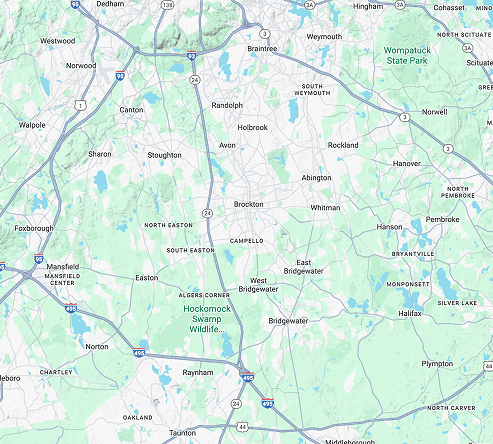
Cases are heard in the county where the incident occurred or where a party lives. Practically, this means a Brockton crash is a Plymouth County case and an Easton crash is a Bristol County case — different courthouses, different clerks, different judges, and different local practices. A firm that appears in those buildings regularly knows things about them that don't appear in any rule book.
Insurance minimums, uninsured and underinsured coverage
Massachusetts requires relatively low minimum liability limits. When an at-fault driver carries only the minimum and the injuries are serious, the at-fault policy runs out fast.
That is what uninsured (UM) and underinsured (UIM) motorist coverage is for — coverage on your own policy that pays when the other driver has none or not enough. Many people don't know they have it. Some of the largest recoveries in Massachusetts injury practice come from UIM claims rather than from the at-fault driver.
UM and UIM claims have their own notice requirements and sometimes go to arbitration rather than trial. Reviewing your own declarations page early is one of the more valuable things a lawyer does in the first week of a case.
What a Massachusetts injury case actually looks like
Step 1: Free Consultation
Tell us what happened. We assess your situation and begin work immediately—quick intake, help accessing medical care, handling everything from our office, virtually, or by coming to you.
Step 2: Strategic Processing
We manage all communication with insurers, medical bills, and lost wages. Our experience protects your claim from being delayed, denied, or undervalued.
Step 3: Active Representation
You have constant access to a designated paralegal and attorney overseeing your claim. We ensure you get medical treatment, lost wages, and full compensation while keeping you informed.
Step 4: Settlement Demand
When ready, we compile all medical records and documentation of how the accident impacted your life and family.
Step 5: Negotiation & Settlement
Insurers know we're prepared to litigate aggressively. This reputation leads them to offer fair, higher settlement values rather than risk trial. You pay nothing unless we win.
FAQ
How long will my case take?
Most personal injury cases settle within 6 to 18 months, depending on the severity of your injuries and how quickly you reach maximum medical improvement. Horizon's Salesforce-powered case management system keeps your case moving on a structured timeline so nothing falls through the cracks.
Will my case go to trial?
The vast majority of personal injury cases — over 90% — settle before trial. However, Horizon is fully prepared to take cases to court when necessary, and insurance companies know it. Our trial readiness is part of why we recover stronger settlements.
What is my case worth?
Every case is different. The value depends on your medical bills, lost wages, the severity and permanence of your injuries, and the available insurance coverage. We will give you an honest assessment during your free consultation — not a number designed to get you signed.